
Least Restraint
Restraint use can result in adverse physical and psychological outcomes for children, youth and health care providers and is only to be used in emergency situations where there is immediate or imminent risk of harm to self or others and when all other interventions have been tried or deemed clinically inappropriate.
When restraint use is necessary, the restraint that applies the least amount of restriction will be implemented for the shortest duration possible with child/youth &/or family/substitute decision maker preference taken into consideration whenever possible.
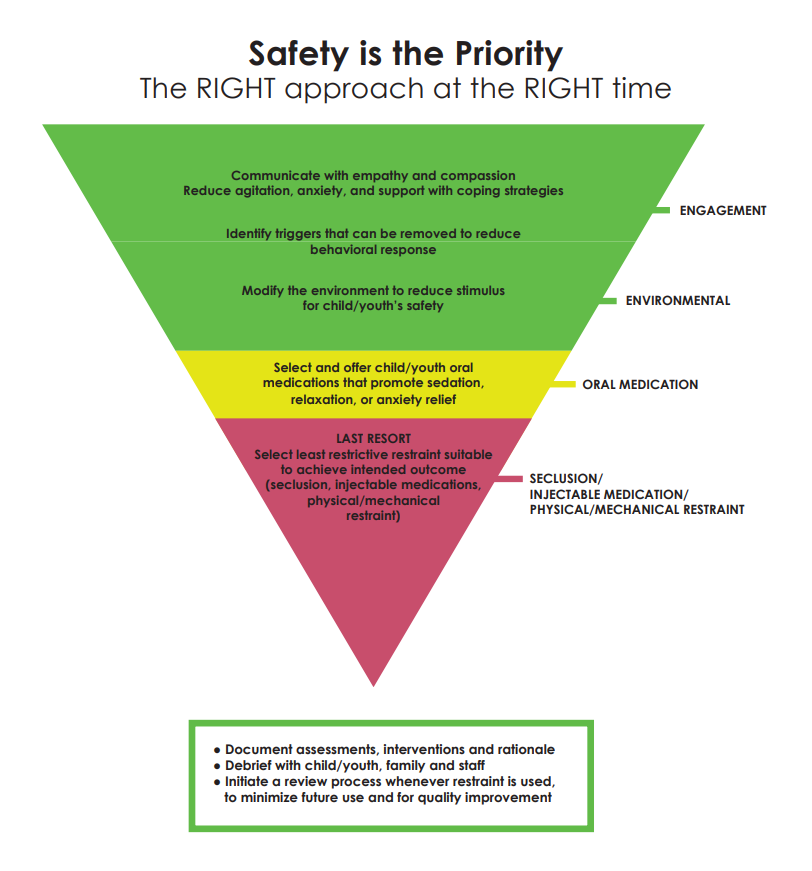
When use of restraints cannot be prevented, the hierarchy of safety should be supported at the "minimally sufficient level", and opportunities to "decrease the level" should always and frequently be explored. Engagement with the child/youth should be maintained throughout the situation and include debriefing.
The resources below have also been incorporated into RIPPL: Resources for Interdisciplinary Practice and Learning for you to include in your competency assessment and learning plans.
Provincial Guideline and Documents
- Child Health BC Provincial Least Restraint Guideline
- Least Restraint: Chemical Restraint Algorithm
- Least Restraint: Hierarchy of Safety Algorithm
Provider Resources
- 8.5 x 11 Chemical Algorithm Two-Sided Print File
- 10 x 13 Chemical Algorithm Poster
- 8.5 x 11 Hierarchy of Safety Two-Sided Print File
- 10 x 13 Hierarchy of Safety Poster
Pediatric Restraint Debrief Guides
- Preparing for Debrief Pediatric Restraint
- Debrief Guide after Restraint with a Child/Youth
- Debrief Guide after Restraint with a Health Care Team
- Debrief Guide after Restraint with Other Patients